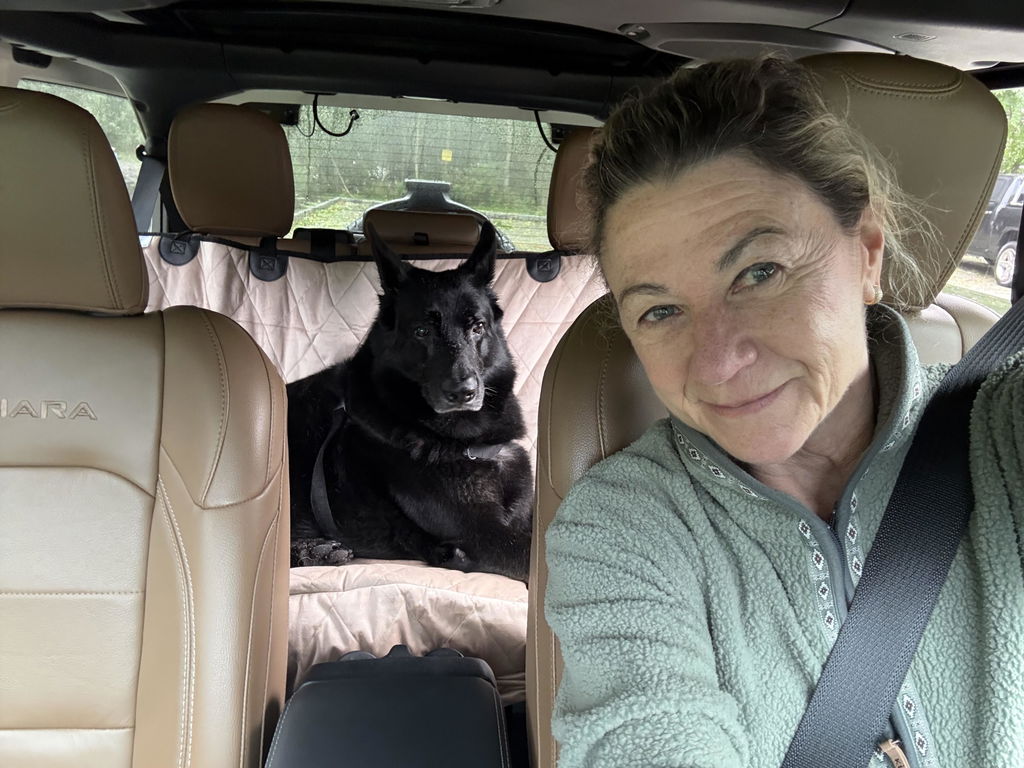

Most dogs should sit in the back seat, secured with a car-safe harness, carrier, crate, or pet restraint. The back seat keeps dogs farther from airbags, pedals, and driver controls. A rear seat cover for pets helps protect your vehicle, but it should still leave buckles and tether points easy to reach.
Why your dog’s seat setup counts
If your dog loves the car, they care more about coming along than where they sit. Still, the seat setup changes the safety of the ride for both of you. A dog who rides loose on a slide during a turn, climbs toward the driver, or gets thrown forward during a sudden stop. The right setup gives your dog a steadier place to settle and makes cleanup easier after hair, drool, and muddy paws. A pet seat protector helps, as long as it works with the restraint you’re using.
Table of contents
Why your dog’s seat setup counts
Where should your dog sit in the car?
Why the back seat is usually safer for dogs
How to keep your dog safe in the back seat
What if your dog needs to ride in the front seat?
How to make the front seat safer for your dog
Examples of safer car setups for different dogs
Safety research and trusted travel guidance
What you need for a safer dog car setup
Shop Plush Paws for safer, easier everyday rides
Where should your dog sit in the car?
Your dog should usually sit in the back seat, away from the dashboard, front airbags, steering wheel, pedals, and gearshift.
The back seat works well for everyday rides, with a rear seat cover for pets that stays in place while leaving restraint access open. A cover helps protect the seat from fur, paw prints, scratches, and drool while giving your dog a more predictable area to sit or lie down.
A front-seat setup should be a backup choice. Some dogs need closer monitoring, and some vehicles have limited space. Even then, your dog should stay secured. A pet seat protector helps with mess, but safety still comes first.
Why the back seat is usually safer for dogs
The back seat offers most dogs the safest everyday riding position because it keeps them away from the vehicle's front. Front airbags are built around human passengers, and a dog in the passenger seat can be too close to that impact zone.
The back seat also helps reduce distractions. A dog near the driver may climb into a lap, bump an arm, block a mirror, or paw at the console.
A back-seat setup gives you more options for managing movement. You use a harness with a seat-belt tether, a carrier, a travel crate, or a hammock-style cover that provides proper access for restraint. A rear seat cover for pets also helps cover the areas your dog uses most.
How to keep your dog safe in the back seat
A good back-seat setup starts before you turn on the car. Secure your dog first, then check that the seat cover, restraint, and buckles all work together.
Use these back-seat safety tips:
-
Use a car-safe harness, crate, carrier, or pet restraint that fits your dog’s size.
-
Attach a tether to a harness instead of a collar.
-
Keep seat belt buckles, latch points, and tether points open.
-
Choose a cover that doesn’t slide, bunch, or pull away from the seat.
-
Use a hammock-style setup if your dog tends to step into the footwell.
-
Keep windows partly closed.
-
Move loose gear off the seat and floor.
-
Check shade, airflow, and water breaks during longer drives.
A pet seat protector should support the safety setup rather than get in the way. Make sure the cover hasn’t shifted over a buckle.

What if your dog needs to ride in the front seat?
The back seat is still the better default, but real life doesn’t always give you a perfect setup. Your dog may need to ride up front because they need closer monitoring, the back seat is full, or they’re less anxious when they see you.
If your dog needs the passenger seat, treat it as a more controlled setup. Move the seat back, secure your dog, and keep them away from the driver’s side. They shouldn’t ride in your lap, lean into the steering wheel area, or move freely around the cabin.
This is where bucket seat protectors help with cleanup and seat coverage. They still need to leave the seat belt buckle and restraint connection open.
How to make the front seat safer for your dog
Set up the front seat before you start driving.
Use this front-seat checklist:
-
Move the passenger seat as far back as possible.
-
Turn off the passenger airbag if your vehicle allows it.
-
Check your vehicle manual for airbag and passenger-seat guidance.
-
Use a harness, carrier, crate, or restraint made for car travel.
-
Attach any tether to a harness instead of a collar.
-
Keep your dog off your lap and out of the driver’s space.
-
Keep the window partly closed.
-
Make sure bucket seat protectors don’t block buckles, straps, or tether points.
The cover should fit snugly enough that it doesn’t bunch under your dog’s paws. Bucket seat protectors are helpful for occasional front-seat rides, but they don’t replace a harness, carrier, crate, or other restraint. If your dog won’t settle, pull over in a safe place.
Examples of safer car setups for different dogs
Small dogs often do best in a secured carrier or booster-style setup in the back seat, where they have a stable base and limited movement.
Large dogs usually need more room to sit, turn, and lie down. The back seat or secured cargo area may work better, depending on the vehicle. A rear seat cover for pets helps protect a full bench seat while giving your dog a steady area for regular rides.
Anxious dogs may need practice before longer trips. Start with short rides, use the same seat location, and bring a familiar blanket or towel. Messy outdoor dogs need coverage that handles mud, shedding, and drool.
Benefits & importance
Choosing the right seat setup helps more than your upholstery. It shapes the whole ride.
A safer, steadier setup can:
-
Help reduce driver distraction
-
Keep your dog in a predictable place
-
Give your dog a steadier surface
-
Protect seats from hair, scratches, mud, and drool
-
Make cleanup quicker
-
Keep buckles and tether points easier to manage
A pet seat protector works best when it fits the way your dog actually rides. If your dog uses the back seat every week, a rear seat cover for pets may be the most practical choice. If your dog rides up front only on short or occasional trips, bucket seat protectors may fit that routine better.
Common mistakes to avoid
Avoid these common mistakes:
-
Letting your dog ride in your lap. This blocks your view, limits your steering, and puts your dog too close to the airbag.
-
Letting your dog ride loose. A loose dog slides, falls, jumps forward, or distracts the driver.
-
Clipping a tether to a collar. Use a harness so the force isn’t focused on your dog’s neck.
-
Letting your dog hang out the window. Flying debris, sudden turns, and nearby traffic create serious risks.
-
Covering buckles with a seat cover. Your cover should protect the seat while leaving restraint access open.
-
Letting loose gear slide around. Bags, leashes, toys, and bowls distract your dog.
-
Adjusting the setup while driving. Pull over before fixing a strap, cover, or restless dog.
A pet seat protector should make the ride easier. Check the fit before you drive, especially if you switch between a back-seat setup and front-seat coverage.

Safety research and trusted travel guidance
Most dog car safety guidance points to the same practical takeaway: dogs ride more safely when they’re secured and kept away from the front airbag zone.
-
Loose pets create a risk for everyone in the vehicle. A dog that rides loose can distract the driver or move suddenly during a stop.
-
The back seat is the safer default. It keeps your dog farther from airbags and helps reduce front-seat distractions.
-
Airbags are a key reason to avoid the front seat. The American Kennel Club says it’s optimal for dogs to ride in the back seat so airbags don’t harm them.
-
Crates, carriers, and harnesses should fit the dog and the vehicle. AVMA encourages evidence-based crash testing for kennels and safety harnesses used during vehicle travel.
-
Pet restraint laws vary by location. Before a longer trip, check state and local rules on pet restraints, open cargo areas, and distracted driving requirements. Safety should guide your setup, even when local laws don’t provide specific instructions.
What you need for a safer dog car setup
A safer dog car setup usually uses a few simple tools together. Helpful options include:
-
A fitted harness or pet seat belt for restrained back-seat travel
-
A crate or carrier for dogs who settle better in an enclosed space
-
A rear seat cover for pets for regular back-seat rides
-
A hammock-style cover for dogs who slide toward the footwell
-
Bucket seat protectors for occasional passenger-seat rides
-
A cargo liner for larger dogs in SUVs
-
Door protection for dogs who lean, paw, or drool near the door
-
A travel towel, collapsible water bowl, and cleanup supplies
If your dog usually rides in the back, a rear seat cover for pets helps protect the seat while keeping the setup practical. If your dog occasionally needs the passenger seat, bucket seat protectors help with hair, drool, and paw marks as long as the restraint still works properly.
FAQ
Is the back seat safer than the front seat for dogs?
Yes, the back seat is usually safer because it keeps your dog farther from airbags, driver controls, and the steering wheel. Your dog still needs a harness, a crate, a carrier, or a restraint. A secure setup helps limit movement during sudden stops.
Can my dog ride in the front seat if the airbag is off?
Your dog may ride in the front seat when it’s truly necessary, and your vehicle allows you to turn off the passenger airbag. Move the seat back, secure your dog, and keep them away from the driver’s space during the ride.
Should I attach a dog seat belt to a collar or a harness?
Attach a dog seat belt or tether to a harness. A collar puts too much pressure on your dog’s neck during a sudden stop. A properly fitted harness spreads force across more of the body.
Are hammock-style dog seat covers safe?
A hammock-style cover helps keep your dog from slipping into the footwell, but it doesn’t replace a restraint. Use it with a harness, crate, carrier, or pet seat belt, and make sure the cover doesn’t block access to the buckle.
What’s the best seat protection setup for dogs?
The best setup depends on where your dog rides. A rear seat cover for pets works well for back-seat travel, while bucket seat protectors help with occasional front-seat rides. Choose coverage that stays in place and keeps restraint access open.

Shop Plush Paws for safer, easier everyday rides
For most everyday rides, the back seat gives your dog a safer, steadier place to travel. If your dog needs the front seat, move the seat back, manage the airbag risk, and secure them before you drive. The right restraint and seat-protection setup makes car rides easier for you and your dog. For practical coverage for hair, drool, muddy paws, and everyday cleanup, shop Plush Paws for travel essentials built for real-life rides.