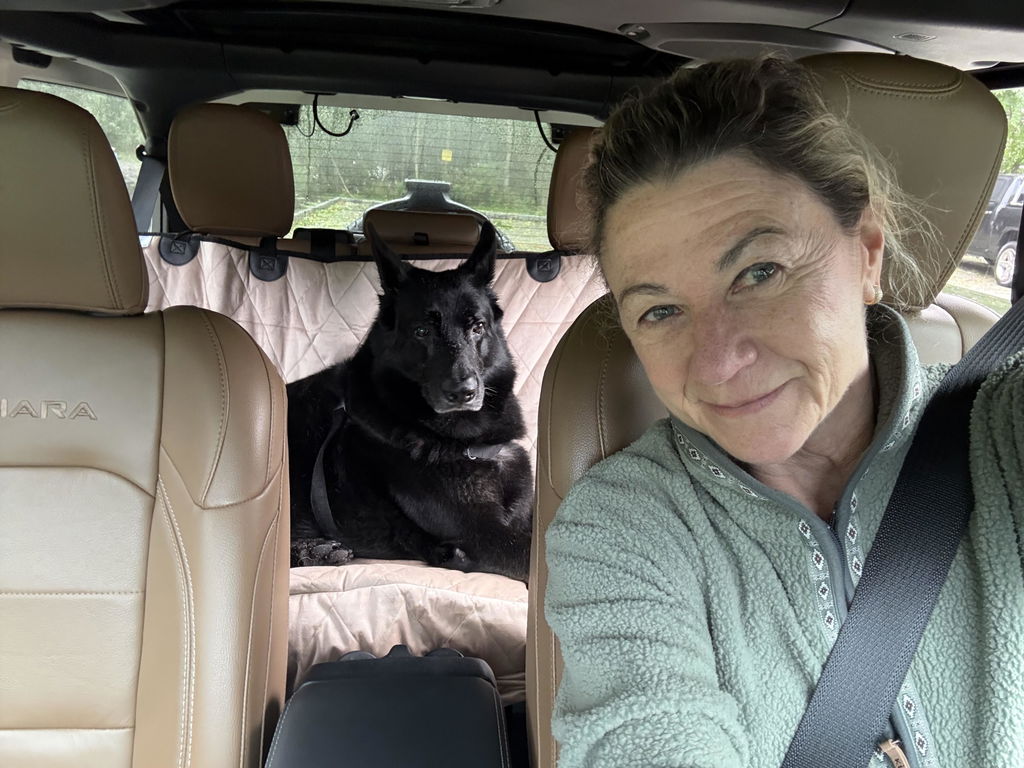

To measure your car interior for a dog seat cover, check the seat width, seat depth, seatback height, headrest spacing, seat belt access, and, if needed, the full hammock drape path. The right measurements help dog seat covers stay in place, cover the areas your dog uses most, and make cleanup easier.
Start with the way your dog actually rides
A seat cover looks like it fits until your dog actually climbs in. That’s when you notice the loose corner near the door, the buckle that’s suddenly hard to reach, or the fabric that bunches right where your dog likes to sit.
Measuring first helps you avoid those little frustrations. It also helps you choose the right setup for your actual car. Whether you’re comparing dog seat covers, dog cargo liners, or bucket seat covers, the best fit comes from checking the space, the anchor points, and the way your dog rides.
Table of contents
Start with the way your dog actually rides
Why fit makes everyday rides easier
What to measure before choosing a dog seat cover
How to measure for different cover styles
Common fit problems to watch for
Benefits of a better-fitting cover
Common measuring mistakes to avoid
What research says about safer dog travel
Find the right fit with Plush Paws
Why fit makes everyday rides easier
A good fit helps the cover stay in place, protects more upholstery, and makes cleanup easier after everyday rides.
If the cover is too small, your dog may step on exposed seat edges. If it’s too large, the fabric bunches or slides when your dog moves. A well-fitting cover should also keep buckles, latch points, and restraint access easy to use.
The simplest way to get that fit is to measure before you buy.
What to measure before choosing a dog seat cover
Start with a soft measuring tape and measure the actual area your dog will use. Don’t rely only on your vehicle's make and model. Two cars could have similar back seats on paper, but feel very different once you account for headrests, buckles, bolsters, and door shape.
Measure these areas first:
-
Seat width: Measure across the usable seating area from one side to the other. Don’t include hard-plastic trim unless the cover will actually rest on it.
-
Seat depth: Measure from the seatback to the front edge of the seat cushion.
-
Seatback height: Measure from the seat cushion up to the seatback. If the cover attaches near the headrests, measure to that point.
-
Headrest spacing: Check where the straps will loop. Adjustable headrests usually make installation easier.
-
Seat belt buckle locations: Note where the buckles sit so the cover’s openings line up.
-
Latch or anchor points: If you use a dog restraint or need child-seat access, mark those spots before choosing a cover.
-
Door-side coverage: If your dog jumps in from the side, leans against the door, or scratches while turning around, check how much edge coverage you need.
-
Cargo space dimensions: For dog cargo liners, measure the cargo floor width, length, the seatback area, and any bumper flap coverage.
-
Front seat dimensions: For bucket seat covers, measure the individual seat width, depth, seatback height, and headrest placement.
Write the measurements down in your phone so you can compare them while shopping. It’s a small step, but it saves you from having to guess.

How to measure for different cover styles
Different covers fit different spaces. Use the right measurements for the style you’re buying:
-
Bench-style dog seat covers: Measure the back seat width, seat depth, seat crease, and seat belt openings.
-
Hammock-style dog seat covers: Measure from the rear headrests, across the seat and footwell, and up to the front headrests.
-
Dog cargo liners: Measure the cargo floor width and length, seatback height, bumper flap area, and side coverage.
-
Bucket seat covers: Measure the individual seat width, depth, seatback height, headrest placement, bolsters, and restraint access.
Common fit problems to watch for
A few real-life examples make measuring easier:
-
Sliding back seat cover: If your dog jumps in from the side and the cover shifts, recheck the seat anchors and door-side coverage.
-
Wrong cargo setup: If your dog rides in the back of an SUV, dog cargo liners usually protect the space better than a standard back seat cover.
-
Too much coverage for one seat: If your dog rides in one spot, bucket seat covers may be easier to manage than a full bench cover.
Benefits of a better-fitting cover
A better fit makes the whole car routine easier to manage. It won’t stop every mess, but it helps protect the areas your dog actually uses and makes cleanup feel less like a project.
A well-fitting cover helps:
-
Keep more upholstery covered
-
Reduce sliding and bunching
-
Make cleanup easier after muddy paws, shedding, or drool
-
Keep buckles and restraint openings easier to reach
-
Give your dog a steadier place to ride
-
Make installation and removal quicker
-
Help the setup feel more predictable on everyday drives
The goal isn’t a complicated setup. It’s a cover that fits your car, works with your dog’s habits, and helps protect the seat without getting in the way.
Common measuring mistakes to avoid
Most fit problems start with one skipped step. Watch for these common mistakes:
-
Only checking the vehicle model: Vehicle fit guides help, but your actual seat layout gives you better information.
-
Measuring only the seat cushion: Hammock-style covers need the full headrest-to-headrest drape path.
-
Forgetting seat belt openings: A cover that blocks buckles makes your restraint setup harder to use.
-
Ignoring headrest spacing: Straps need solid anchor points, so check fixed, narrow, or unusual headrests before you buy.
-
Choosing too large: Extra fabric bunches, sags, or slides under your dog’s paws.
-
Choosing too small: A cover that's too small leaves exposed spots where your dog steps, sits, or leans.
-
Forgetting how your dog gets in: If your dog jumps in from the side, door-side coverage is as useful as seat cushion coverage.
-
Measuring dog cargo liners like seat covers: Cargo areas need floor, seatback, sidewall, and bumper measurements.
-
Skipping seat shape for bucket seat covers: Side bolsters, headrests, and armrests all affect the fit.
What research says about safer dog travel
A dog seat cover isn’t a safety restraint, so it shouldn’t replace a harness, crate, or carrier. Its main job is to help protect your car and make cleanup easier. Still, the right fit supports a better travel setup.
Keep these points in mind:
-
Seat covers protect the car, not the dog: A cover helps with hair, mud, drool, and scratches, but it doesn’t secure your dog during the ride.
-
Fit still plays a role: A well-fitting cover should leave buckles, latch points, and restraint openings easy to reach.
-
Loose fabric creates distractions: Covers that slide, bunch, or block access make the ride harder to manage.
-
Many dogs ride in cars regularly: AAA and Kurgo survey data found that many drivers travel with dogs on everyday trips.
-
Restraints are still important: The same survey found that fewer drivers reported using a pet restraint system.
-
Testing matters for restraint products: The Center for Pet Safety emphasizes independent testing and certification for products designed to secure pets in vehicles.
What to use before you buy
-
Soft measuring tape
-
Painter’s tape
-
Phone notes
-
Old blanket
-
Flashlight
-
Towel or sheet
After measuring, match the cover to where your dog rides most:
-
Back seat: Dog seat covers are usually the best fit.
-
SUV or hatchback cargo area: Dog cargo liners usually make more sense.
-
Single seat: Bucket seat covers give you a cleaner, more focused setup.
You can also test the fit with an old blanket. Lay it where the cover would go, tuck it into place, and let your dog climb in. If it shifts, gaps, or blocks buckle, measure that area again.
FAQ
How do I know if a dog seat cover will fit my car?
Measure the seat width, depth, seatback height, headrest spacing, and buckle locations. Your actual seat layout gives you the best fit.
Should a dog seat cover fit tightly or loosely?
It should fit snugly without pulling away from the seat. Too much slack may bunch, while too much tension creates gaps.
How do I measure for hammock-style dog seat covers?
Measure from the rear headrests, across the seat and footwell, and up to the front headrests. This checks the full drape path.
Are dog cargo liners measured differently?
Yes. Measure the cargo floor, seatback coverage, side coverage, and bumper flap area if included.
When should I use bucket seat covers?
Use bucket seat covers when your dog rides in a single seat. Measure the seat shape, headrest area, and restraint access.
What should I do if my dog seat cover keeps sliding?
Check the anchors, adjust the straps, smooth the cover, and make sure the backing sits flat against the seat.

Find the right fit with Plush Paws
A better fit starts with a tape measure and a little attention to how your dog actually rides. Check the seat dimensions, anchor points, buckles, and coverage areas before you choose. That simple prep helps you avoid sliding, bunching, exposed upholstery, and blocked access to restraints. For everyday rides, easier cleanup, and practical seat protection, shop Plush Paws.